
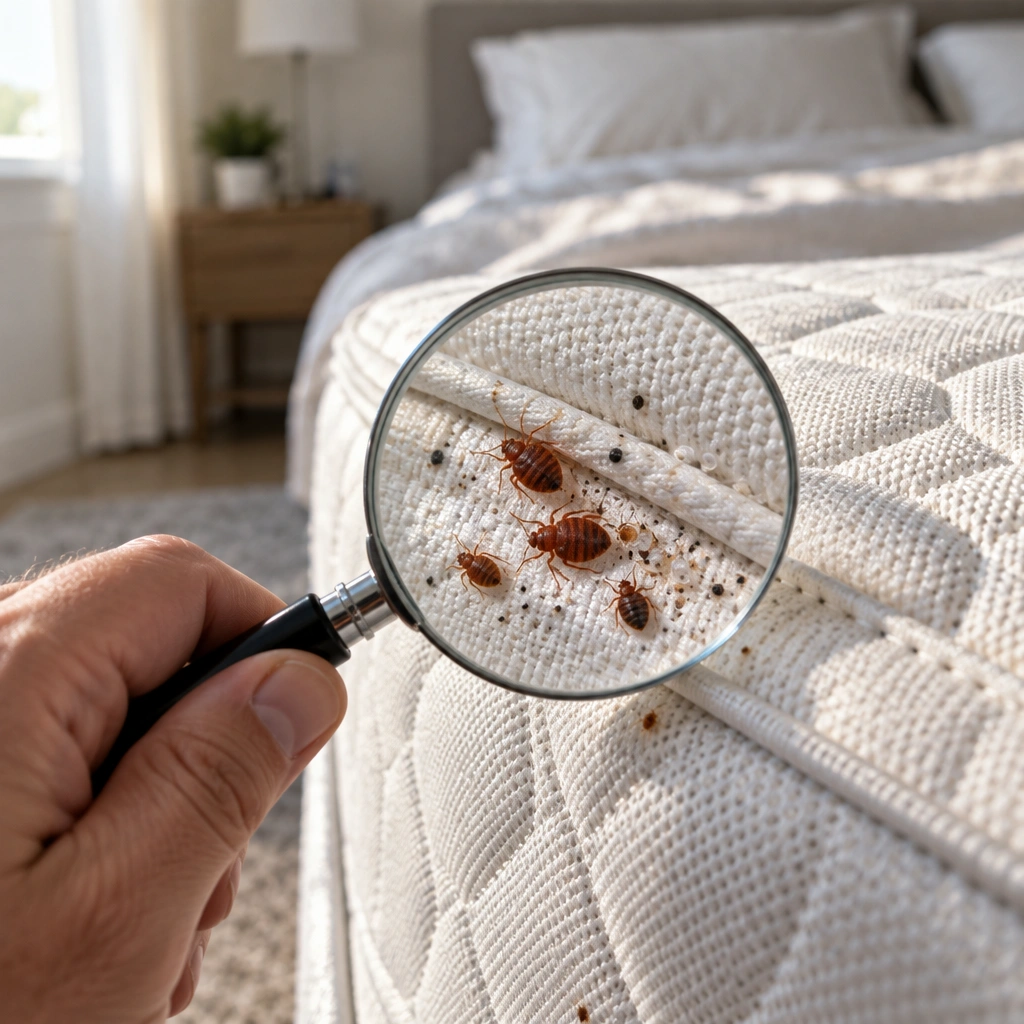
Bed Bugs can travel more than 100 feet per night and quietly enter your house while you are asleep. Each Adult female can produce 200-500 eggs during her lifetime and create a major infestation quickly. We understand the stress caused by finding these insects. Early detection is key.
The content below shows what Bed Bugs look like at various stages of growth and the Signs of a Bed bug infestation you need to recognize. You'll learn how Bed Bugs enter homes and where they commonly enter. This content will help guide you on how to remove Bed Bugs through DIY remedies and professional services. Additionally, we will discuss how to determine if you have Bed Bugs and ways to prevent new infestations.
Why identifying Bed Bugs is important
Identifying Bed Bugs is important because it helps save time and money. Treating for the incorrect insect can make the real issue hide further and grow unchecked.
Appearance & size
Adult Bed Bugs are typically 5-7 mm in length. That is roughly the same size as an apple seed. Their flat, oval bodies let them fit into narrow spaces, including spaces smaller than a credit card. Before feeding, they are reddish-brown with a rounded or disk-like shape. Following feeding, the body will elongate and swell. Their shape resembles a torpedo rather than a flat oval.
Six legs, two short antennae, and small wing pads exist. However, Bed Bugs are unable to fly or jump. Their eyes extend slightly outward from each side of their head. Short, gold-colored hairs cover their bodies. A unique, sweet, musty odor comes from glands along the underside of their body.
Stages of growth: eggs, nymphs, adults
Bed Bugs go through three distinct stages of development. There are eggs, nymphs, and Adult Bed Bugs. Eggs are about 1 mm in diameter. They are white and round, resembling a small grain of rice. Bed bugs will attach to surfaces in clusters near mattress seams or other tight areas. It takes around five days for the eggs to hatch.
Following hatching, the baby Bed bug will begin its journey through five molting stages before becoming mature. The first nymph stage will measure approximately 1.5 mm. Because unfed nymphs are small and pale (translucent or pale yellow), they can be hard to spot against lighter-colored bedding. Once a nymph has consumed Blood, however, its abdomen will swell and appear bright red. This resembles a "moving raspberry seed."
All nymph stages require Blood consumption before molting. The approximate sizes for each of the five nymph stages are: 1.5mm, 2mm, 2.5mm, 3mm, and 4.5mm. Assuming adequate food intake and room temperature, nymphs will reach adulthood within four to five weeks.
Common look-alikes and how to distinguish them
Carpet beetles are often mistaken for Bed Bugs. Adult Carpet beetles have a rigid, dome-shaped covering with functional wings, whereas Adult Bed Bugs do not have functional wings. Carpet beetle larvae have long, thick, reddish-brown hairs covering their bodies and release individual hairs that can irritate skin when detached; bed bug nymphs do not have this hair and cause skin irritation by biting.
Bat Bugs resemble Bed Bugs but have longer hairs behind the Bat bug's head than the width of the Bat bug's eyes. Fleas are smaller and can jump, whereas flea bodies are flat side to side rather than top to bottom; ticks have eight legs compared to six on Bed Bugs and expand when fed, whereas Bed Bugs stretch horizontally.
Cockroach nymphs have longer antennae than Bed bug nymphs and spines on their legs; in addition, cockroach nymphs have a tail-like structure called a cerci.
Location is critical. Cockroach nymphs usually inhabit areas behind appliances such as refrigerators, whereas Bed bug nymphs are generally confined to mattress seams.
Early Signs of Bed Bug Infestation
If you identify potential Signs of a Bed bug infestation before seeing live Bugs, you have a better opportunity to address it effectively sooner.
Skin blisters/bite marks
Bed bug bites can present as small red blisters on exposed skin, which may form linearly, in zig-zags, or in clusters. People react differently to bites, with some experiencing itchiness/rashes and others having little/no reaction. Blisters/bite marks may take up to fourteen days to develop in certain individuals.
Bed Bugs inject an anesthetic/anticoagulant into the skin at the moment of biting, so you may not perceive the bite. In general, Bed bug bites occur on the head, neck, arms/hands.
Since there are varied reactions to bites, identifying bites alone is unreliable evidence of Bed Bugs.
Blood stains/fecal spots
As a result of crushing after feeding, tiny bloodstains may appear on bedding/pillow cases/pajama tops as tiny rust-color/red dots.
Excretion from crushed Bed Bugs results in fecal spots, which are dark brown/black dots approximately 0.05 inches in diameter (similar to the end of a ballpoint pen tip). The age of fresh fecal spots varies, with wetter/fresher spots appearing darker brown/black while older spots appear drier/grayish powder. Fecal spots look like a felt-tip black marker line on fabrics/similar raised bumps on non-fabric surfaces. Wiping with a damp cloth leaves brownish smears.
Shed skins/eggs
Shed skins are empty translucent/pale shells that match the outline of the nymph/Adult itself, and appear near hiding sites. Since nymphs molt five times before maturation, numerous shed skins indicate active nymph growth/feeding in the area.
Due to their small size (about 1 mm), eggs resemble small grains of rice and are attached in groups inside tight spaces/crack openings.
Unique Musty odor
A sweet/Musty scent associated with berries is identified as originating from Bed Bugs. As infestations increase in severity, the initial sweetness fades and is replaced by a harsher metallic smell from oxidized fecal matter.
Where do Bed Bugs originate?
Bed Bugs do not originate in your Home; they hitchhike onto an object/person traveling from an existing infestation site, so anyone who travels through/visits an infested location is at risk.
Luggage & travel
Hotel/motel/cruise ship/bus/train locations are typical places where Bed Bugs await their next vehicle for travel. According to a 2016 Survey conducted by Orkin Pest Control, 82% of 100 U.S. hotels reported treating bed bugs in the previous year. International travel allows Bed Bugs to migrate rapidly from one country to another.
Slim bodies allow Bed Bugs to fit into crevices/seams/luggage, etc., allowing them to remain alive without feeding for several weeks/months. Typically,y travelers unknowingly carry them.
Second-hand items & furniture

Upholstered furniture provides the greatest number of potential hiding sites for Bed Bugs due to available space within seam crevices, piping, zipper areas, etc. Padding layers within cushions, etc. Used mattresses pose significant risk as they contain abundant habitat for Bed Bugs; in fact, many experts advise avoiding second-hand mattresses entirely. Although hard furniture items (e.g., dresser, nightstand) pose relatively low risk for harboring bed bugs, they still warrant examination for hidden sites (joints/drawer slides/underside).
Shared walls/unit buildings
Bed Bugs traverse multi-unit buildings through electrical conduit/plumbing chase/sharing walls/ceilings/common hallway(s); in fact,t untreated infestations can potentially transfer between adjacent apartments within days-weeks. Both adjacent units should be inspected/treated relative to infested apartments.
Other common points of entry
Visitors can bring Bed Bugs onto their personal belongings without realizing it, particularly if Visitors have their own established Bed bug infestations at their residence(s). Movie theaters, waiting rooms/public transportation, etc., are also possible environments for harboring Bed Bugs.
Treatment options for removing Bed Bugs: remedies & preventative measures
Removing Bed Bugs involves what is called integrated pest management (IPM).
DIY methods: heat treatments & cleaning
Washing and drying laundry on high heat for thirty minutes can destroy eggs and kill live Bed Bugs. Simply washing items does not kill eggs. Utilize a vacuum cleaner on all surfaces including molding/windows/floors/mattress seams/etc.; be sure to discard sealed vacuum bags outside right away.
When to call professional exterminator services
Contact an exterminator if you observe increased physical signs of bites; large numbers of Bed Bugs in one location; bed bugs in uncommon locations (window sill/electrical outlet); repeated infestations; or if professional services use heat treatments/heated equipment/chemical agents/canine sniffing services.
Preventive measures against future re-infestations
Conduct regular examinations of your Home for at least twelve months post-treatment for evidence of Bed Bugs; utilize interceptors under Bed legs to monitor for evidence of Bed Bugs throughout this period; maintain mattress encasements installed as part of the treatment process for at least one year since trapped Bed Bugs can live for extended durations without consuming food before starvation.
Protection during travel
Use the sleep method: Survey surfaces for Signs of rust-colored stains; lift mattresses/furniture; elevate luggage on racks away from beds; get into luggage upon repackaging; dry all clothing in a hot dryer for 15 minutes upon arrival Home.
Encasements & monitoring devices
Encase mattresses in bite-resistant encasements with sealed zippers/small teeth to prevent escape; trapped Bed Bugs will die within one year. Install interceptors (traps) under Bed leg posts to monitor activity for at least twelve months post-treatment.
Summary
Your best opportunity for controlling a Bed bug population occurs immediately upon identifying Signs of an infestation. Now that you know the characteristics of various developmental stages of bed bugs, where they live, and the signs of an infestation, inspect your Home regularly and respond promptly when you find evidence of infestation activity. Whether you attempt remediation yourself or contact a professional service provider, acting expeditiously is essential. Protect yourself while traveling, and thoroughly inspect second-hand items purchased before installation/use.
FAQs
Q1. How can I stop bed bugs from entering my home in the first place? Reduce clutter to eliminate hiding spots, seal cracks and crevices in walls and baseboards, avoid bringing home discarded furniture from the street, and inspect secondhand items carefully before purchasing. When traveling, use the SLEEP method: survey surfaces for signs, lift mattresses to check underneath, elevate luggage on racks away from beds, examine your belongings when repacking, and place all clothing in a hot dryer for 15 minutes after returning home.
Q2. What should I do to avoid bringing bed bugs back from a trip? Keep your luggage elevated on racks and away from beds while staying in hotels. Inspect the room for rust-colored spots, blood stains, or live bugs before unpacking. When you return home, immediately place all clothing in the dryer on high heat for at least 15 minutes, even items that weren't worn. Vacuum your suitcase thoroughly and store it away from sleeping areas.
Q3. Is it safe to visit someone's home if I currently have bed bugs? It's best to avoid visiting others until your infestation is fully treated and resolved. Bed bugs can easily hitchhike on your clothing, bags, or belongings and spread to another location. If you must visit, change into freshly laundered clothes that have been dried on high heat immediately before leaving, and avoid bringing bags or coats into their home.
Q4. How long should I monitor my home after treating a bed bug infestation? Continue regular inspections for at least 12 months after treatment. Use interceptor traps under bed legs to monitor for activity throughout this period. If you've used mattress encasements, keep them in place for at least a year, as trapped bed bugs can survive without feeding for extended periods before eventually starving.
Q5. When should I call a professional exterminator instead of treating bed bugs myself? Contact a professional if you notice large quantities of bed bugs in a single area, if bugs appear in unusual locations like window sills or electrical outlets, if your physical symptoms worsen, or if infestations keep returning despite your DIY efforts. Professionals have access to heat treatments and specialized chemicals that are more effective for severe or persistent infestations.
Bed Bugs | Blog Article | Junk Under Junk | All Rights Reserved | Shrewsbury MA